
In Indonesia, at Sukarno Hada Airport, the customs got more papers for deliveries and notes (CN). In 2018, they got 5 million, and in 2019, it became 60 million. This number stayed the same until 2023.
After checking these things, most are cheap, priced under $3, and many come from China. China gives a lot of stuff to Indonesia. It’s a big part of their trade, making up 26.4% of all the things they bring in. This blog will tell you more about what things Indonesia likes to get.
Mechanical Equipment

Overview of the Indonesian Machinery Industry Market:
In Indonesia, big users of machines are the car industry, making up 41% – 64%, and then the electronics industry and home and office machines, which are about 8% – 30%. The packaging industry is around 10%, and the medical industry is about 6%.
Now, Indonesia can’t make enough big and super-precise machines for the giant industries in the country, so they have to buy them from other places. But the smaller industries in Indonesia are trying hard to make their own machines.
In 2021, Indonesia mostly obtained its machines from China, Japan, Taiwan (China), and South Korea, according to information from the Indonesian Central Bureau of Statistics.Here’s the translation:
1、China(49%)
2、Japan(12%)
3、Germany(4%)
4、Korea(4%)
5、Italy(2%)
6、Taiwan(China)(2%)
Why Asian Machinery Dominates Indonesia Over Europe?
Firstly, Asian machinery has a higher market share in Indonesia because it has a lower selling price. Machines from Europe are expensive, and they don’t fit the quick recovery plan for Indonesian Asian businesses. Also, Japanese companies help each other a lot, making them very popular.
Secondly, fixing machines is quite simple. Indonesia’s machines break a lot and need lots of fixing. People who operate foreign machines need many fixers to keep their brand looking good. Having enough spare parts is also important. Asian brands are better at this than European and American brands.
Textiles and Clothing
China is the largest importer of textiles in Indonesia
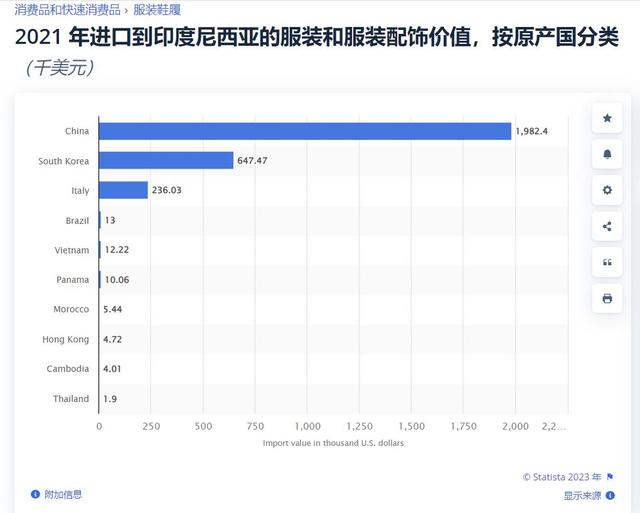
In 2021, Indonesia got clothes, accessories, and fur things from China, and it cost about $2 million. From South Korea, it was about $647,500.
In addition, Indonesia is the fourth biggest country with many people. Lots of people there like to buy clothes and things to wear. Making clothes is an important job, and it helps the country a lot.
Why Chinese Textiles&Clothing Cheap?
1.Production Scale and Cost Advantages
China is really good at making a lot of clothes and fabrics, and it doesn’t cost too much. They have many people who can work, and they don’t get paid a lot, so the things they make are not too expensive.
2.Design and Quality Improvement
China’s clothing and textile industry has gotten better at designing and making things well. Some companies are thinking more about how things look and making sure they are good quality. They are using new technology and machines to make things even better. People around the world like buying clothes and textiles from China more because of this.
3.Market Development and Marketing Capabilities
Chinese companies that make clothes and textiles are very good at selling things and telling people about them. They know what people in China and other countries like and want. They use many ways to tell people about their products and sell them all over the world. The Chinese government helps these companies by giving them special treatment and support when they want to sell things in other countries.
4.Supply Chain and Logistics Advantages
The Chinese textile and clothing industry is also good at getting things from one place to another. China has everything it needs to make clothes, like materials and colors, and a good way to move things around the world, which makes it cheaper for companies.
Impact of Imports on Indonesia’s Textile Industry
The machines used in the local textile industry are outdated, and the production process is still relatively poor compared to foreign countries. In addition, a large number of foreign textiles have flooded into Indonesia, making them more popular among the public in terms of craftsmanship and style than local textiles. This has led to local people’s preference for imported textiles, with the most obvious being clothing.
Toys and Games
“World Toys Look at China”
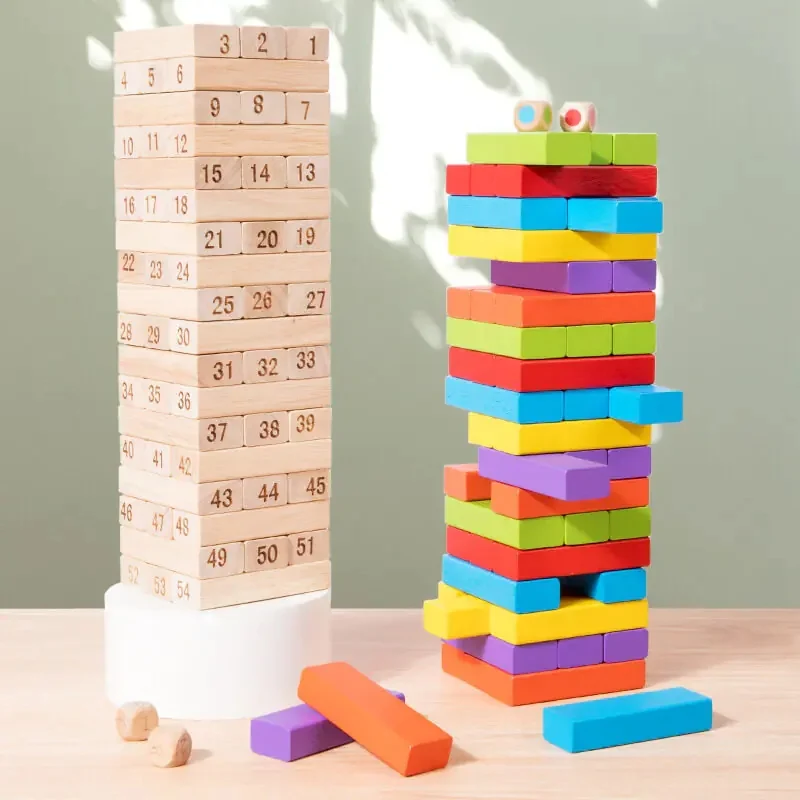
China’s toy industry started a long time ago with a children’s game called “Colorful Illustrated Characters.” China became the biggest maker of toys in the world because they had advantages like workers who didn’t cost a lot and rules that made companies from other places want to invest in China.In this “world toy factory”, various “toy dreams” can be realized. Because over 70% of global toys are produced in China, which has a wide variety of toys and complete styles. From toys made of various materials such as plush, metal, and plastic, to functional toys for puzzle, enlightenment, sports, art, and more, to toys that cater to the preferences of children, adults, and elderly people of all ages, you can say that China has everything you want.
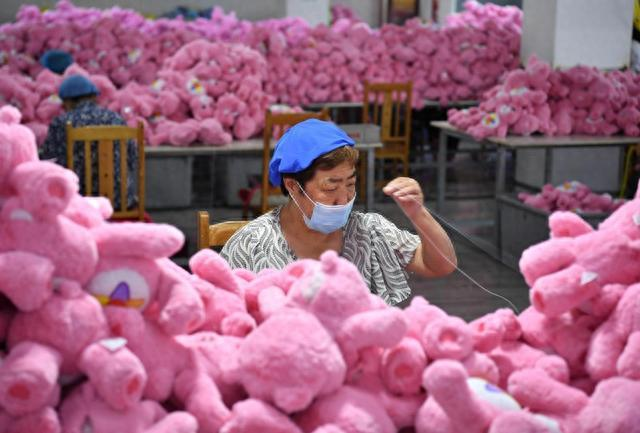
Many companies in China make toys. There are over 5 million of them, and they are mostly in places near the coast like Guangdong, Shandong, Jiangsu, and Zhejiang. One special place is Chenghai District in Shantou City, Guangdong Province. It’s called the “Toy Capital of China.” A lot of toy companies are there, and people say, “China Toys Look at Guangdong, Guangdong Toys Look at Chenghai.
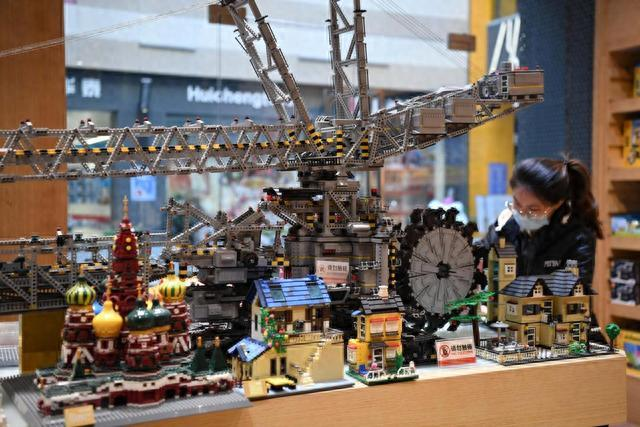
At the same time, China is also the world’s largest toy exporter, with nearly 90% of its products directly exported to countries around the world. AI Finance wrote in “The 100 Year Development History of Chinese Toys” that Chinese toy exports began in 1959 and pushed Chinese toys to the world at the toy exhibition held in Hong Kong, China in 1965. Afterwards, Bear Photography, smoking trains, jet planes, and other products sold very well in Hong Kong, Southeast Asia, and even Europe.
Outlook of Indonesian Toy Market
Indonesia’s toy industry has a bright future. The country has a high total income, and people have more money to spend on toys because the economy is growing. Indonesia is the largest economy in Southeast Asia, and many people, especially kids under 14 years old (about 25% of the population), love to play with toys. Even with COVID-19, more babies are being born in Indonesia, so there’s a big demand for toys. In 2021, each person in Indonesia had about $4140 to spend, and there were over 2.5 million new babies. This means there are lots of potential customers for the toy industry.
How to import to Indonesia?
- Special import license.
Some goods require a special license from the Ministry of Trade, some goods are prohibited from import, and some goods can only be imported by authorized exclusive agents. Many goods also have import monopoly measures and quota regulations. - Document requirements.
(1) Commercial invoice. The invoice must specify the names and addresses of the exporter and consignee, the place and time of shipment, the marking, serial number, quantity and type of the shipment, the weight and content of each item, and be accompanied by a detailed product name and customs tariff number.
(2) Certificate of Origin. There is no unified requirement, only the Indonesian official agency reserves the right to request a certificate of origin in individual cases. The certificate of origin requires 3 original and 2 copies.
(3) Other documents. The inspection report (LKP) requires that all goods must undergo quality, quantity, and price checks before shipment. Some of these goods are exceptions, such as specialty goods worth less than $5000, crude oil, petroleum, precious metals, gemstone art, etc. - Checking Products.
In Indonesia, they look at most things that come into the country, especially if they cost more than $5000. When they need to check things before they’re sent, people in Indonesia give special papers (like permission and other important papers) to checkers in the country that’s sending the stuff. Using these papers, the checkers talk to the person or company sending the things and figure out when to check the stuff. The person or company sending the things needs to share a list of prices, details about the stuff, copies of official bills, and other important papers with the checkers. They also need to give copies of other papers like the list of things being sent and the bill for loading the stuff. Once everything is checked, and all the right papers are ready, the checker writes a report about what they found. - Special Rules for Packing Things.
In Indonesia, there are special rules for packing certain things. Like for food, drinks, dishes, glasses, stuff for the house, clothes, and soap, they have to be put in the boxes that the company that made them used, and each thing needs to be put in a box by itself based on what it is, how it works, and the brand it has. They also need to write on the box what kind of thing it is, how much there is, how heavy it is, and the brand. They have to be careful about the weather in Indonesia, so they make sure the boxes are good at stopping water and rust. - Taking Care of Things at the Border.
When things arrive in Indonesia, they have to be taxed in 30 days. In Jakarta’s port, if they take too long, they go to a special place that’s part of the National Port Corporation. They can stay there for 1-3 months. If nobody comes to get them in time, they sell them at an auction in the warehouse. The money they get from the auction is used to pay for storing the things. They keep what’s left for 3 years. If nobody asks for it in those 3 years, they give it to the Indonesian government, but you can only get your things back if you pay the taxes.
Conclusion
China sends many different things to Indonesia, like toys, clothes, and machines. Indonesia needs these things, and China is good at making them.
We’re Union Yiwu, a 19+ experience sourcing company in Yiwu China.Help you find the best price manufacturers in Yiwu China for free. We have 50,000+Cooperation Factories, 10000㎡ Showroom. Please feel free to CONTACT US if you want help.